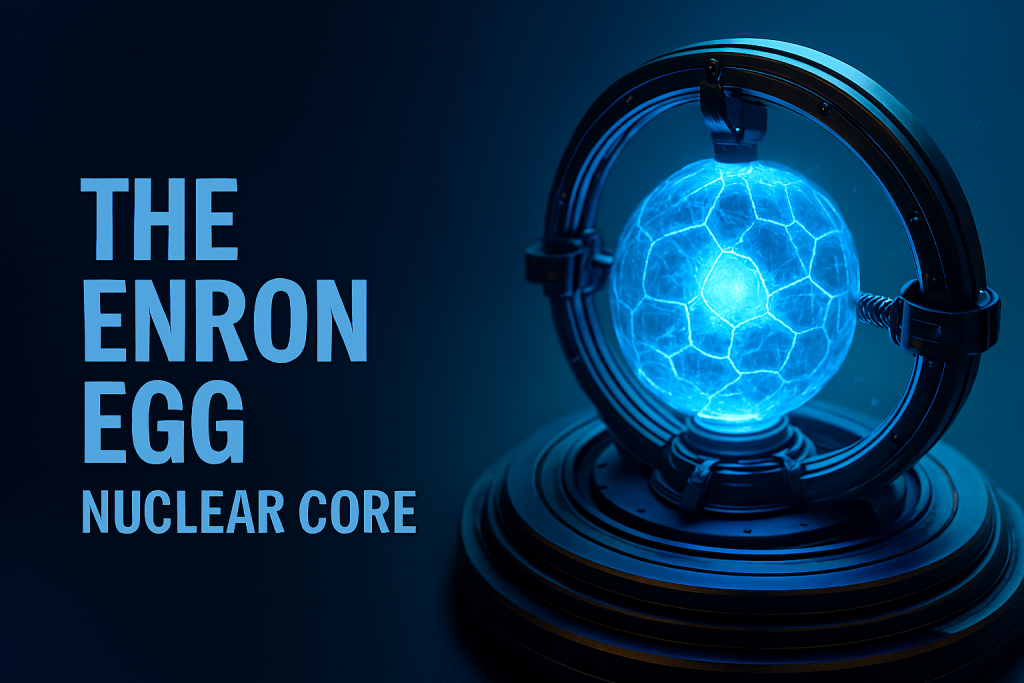
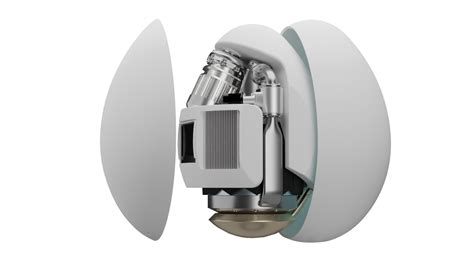
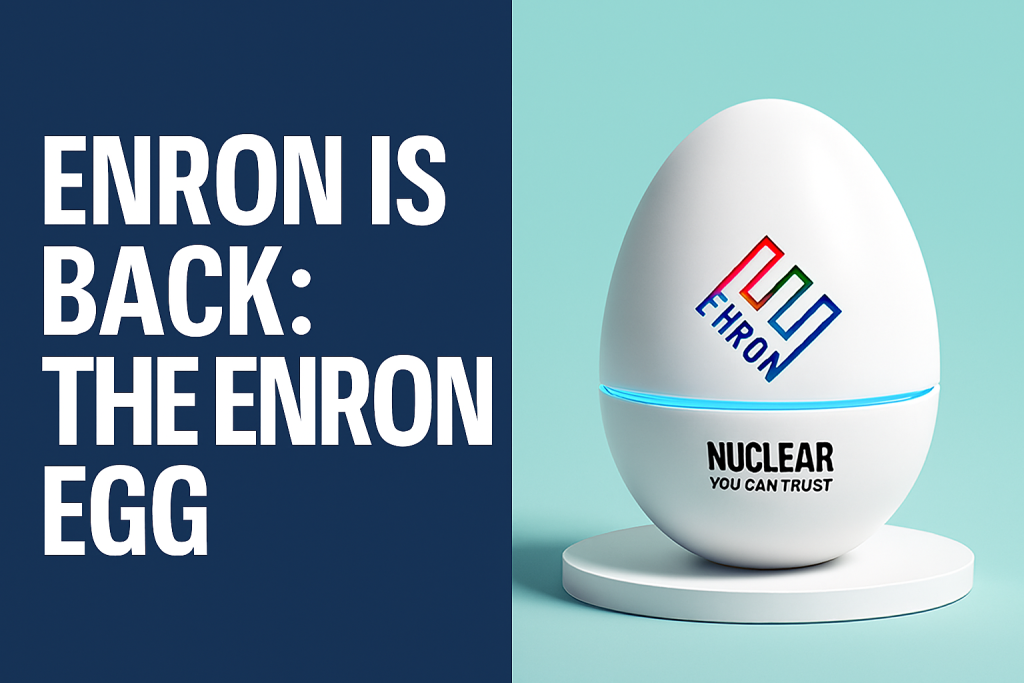
The nuclear core of the Enron Egg is the centerpiece of its futuristic (and satirical) design. While the Enron Egg itself is a wonderful concept, the way its “core” is described borrows heavily from real nuclear engineering principles to make it sound plausible. Here’s how it’s imagined:
⚛️ The Enron Egg Nuclear Core
- Fuel Composition
- Allegedly uses uranium zirconium hydride (UZrH) fuel rods.
- This type of fuel is known for stability and compact reactor applications in research reactors.
- Neutron Moderation
- The core supposedly integrates hydrogen atoms in zirconium hydride to slow down neutrons, making the reaction more controllable.
- This mimics real-world designs where moderators like graphite or heavy water are used.
- Control System
- Equipped with boron control drums that rotate to absorb or reflect neutrons, regulating the chain reaction.
- This is a nod to safety mechanisms in small modular reactors.
- Cooling & Safety
- Marketed as “self-cooling” with passive heat dissipation — no pumps or external systems required.
- The egg shape is symbolic, suggesting containment and resilience.
- Digital Monitoring
- Fictional specs include a chip-based 24/7 monitoring system, ensuring the reactor never overheats or destabilizes.
- This plays into the futuristic branding of “Nuclear You Can Trust.”
🥚 Why the Core Matters
The nuclear core is the heart of the Enron Egg’s marketing pitch — it makes the product sound like a miniaturized, safe, futuristic reactor. In reality, it’s satire, but it cleverly references real nuclear micro-reactor research happening today.