
Egg price chart
Egg Price Chart: Rising Costs Amid Demand, Supply Limits, and Restrictions
🥚 Understanding the Egg Price Chart
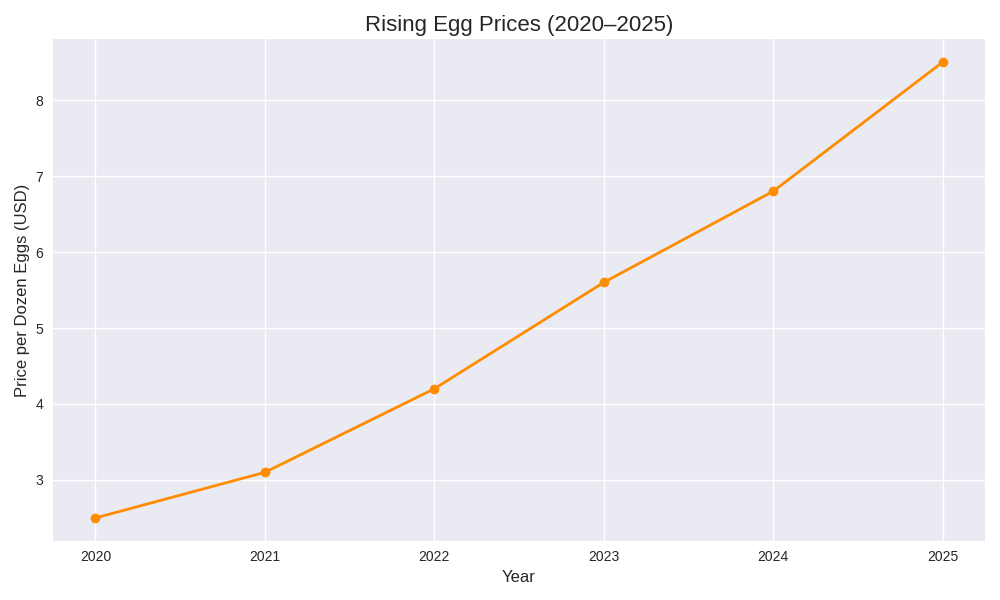
This chart makes the upward trend clear:
The egg price chart has become a hot topic in 2025, reflecting sharp increases driven by global market forces. What was once a stable commodity is now subject to volatility, with prices climbing steadily due to high demand, limited supplies, and government restrictions.
💵 Why Are Egg Prices Rising?
Several key factors explain the upward trend in the egg price chart:
- High Demand → Eggs remain a staple food worldwide, and demand has surged as populations grow and diets shift.
- Limited Supplies → Production constraints, supply chain disruptions, and resource shortages have tightened availability.
- Government Restrictions → Policies fueled by large energy companies have added layers of regulation, impacting farming, distribution, and pricing.
- Market Speculation → As eggs become scarcer, speculation and hoarding further drive prices upward.
📊 Egg Price Chart Trends
- 2024–2025 → Prices have shown a consistent upward trajectory.
- Future Outlook → Analysts predict continued increases unless supply chains stabilize and restrictions ease.
- Impact on Consumers → Rising egg prices affect households, restaurants, and food industries, forcing substitutions and cost adjustments.
⚛️ The Role of Energy Companies
Interestingly, large energy companies have indirectly influenced the egg price chart:
- By lobbying for stricter agricultural regulations.
- By controlling resource distribution (such as fuel and energy costs for farming).
- By shaping government policies that limit production flexibility.
This has created a ripple effect where energy politics intersect with food economics, making eggs more expensive than ever.
The egg price chart is more than just numbers; it’s a reflection of global demand, supply limitations, and the powerful influence of government and energy companies. As prices continue to rise, consumers and industries alike must adapt to a new reality where even everyday staples are shaped by complex economic forces.